Paver Pool Decks
Travertine and paver pool decks in Phoenix that stay cooler underfoot, resist heat and UV, and give your pool a slip-resistant surround. Free estimates.
Start Your Project
Step 1 of 2Request a Free Quote
Free design consultation & estimate — no obligation.
Pavers & Hardscaping
Paver Pool Decks in Phoenix, AZ
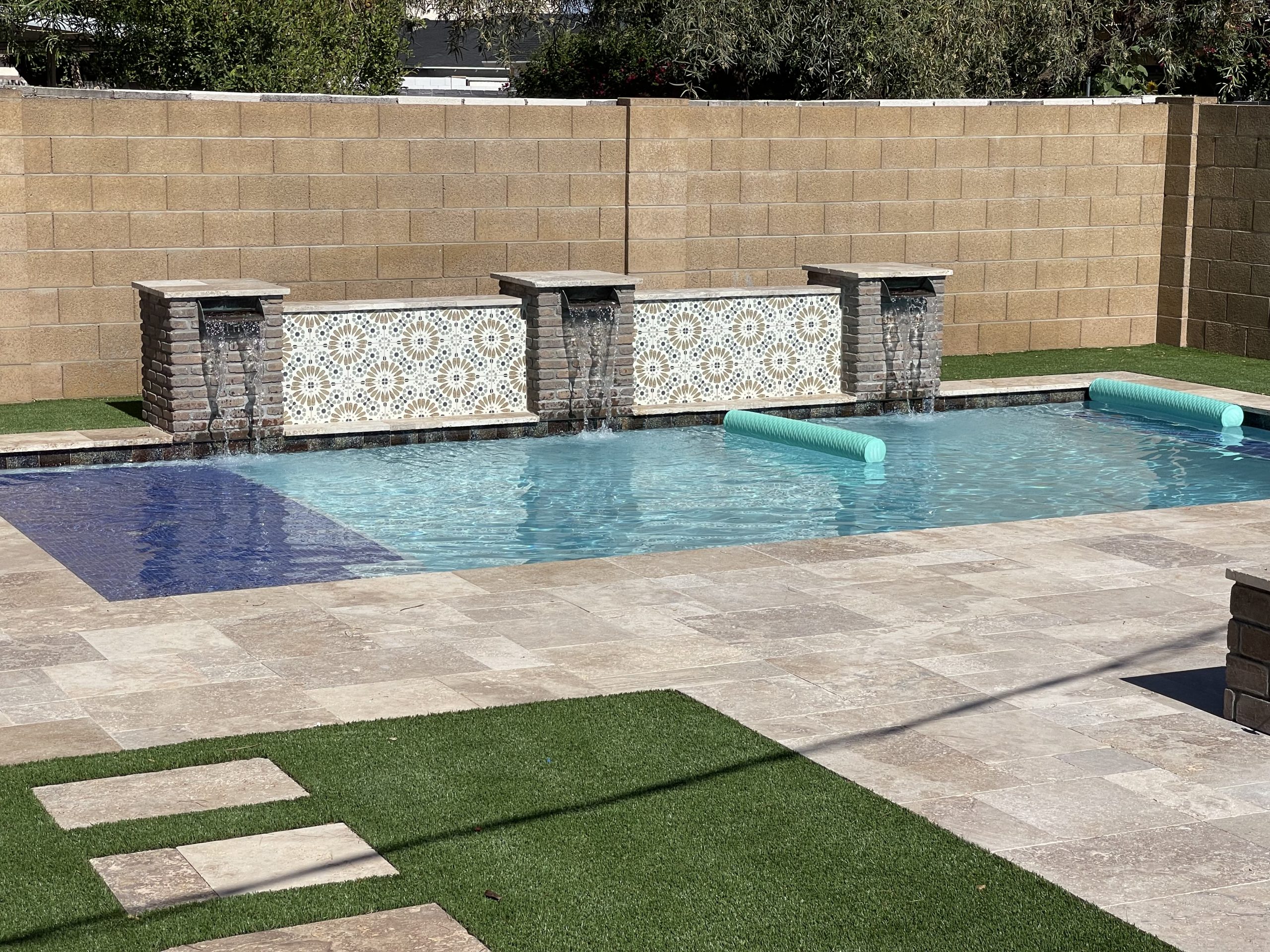
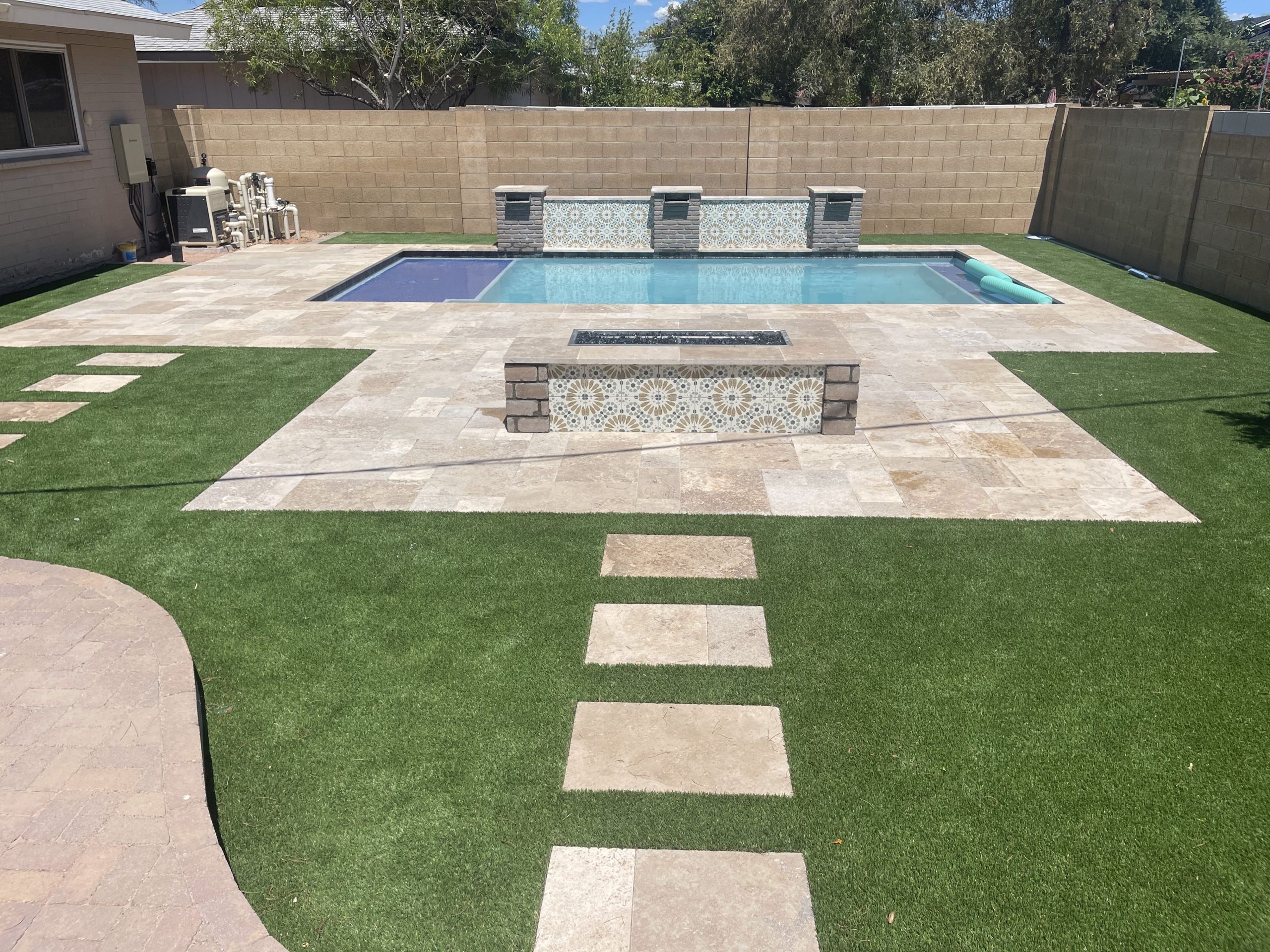
A paver pool deck is one of the biggest upgrades you can make to how a pool feels to use in Arizona. Poured concrete around a pool soaks up the desert sun and gets painfully hot by mid-morning; travertine and light-toned pavers stay noticeably cooler underfoot, so the deck is comfortable to walk on barefoot through the hottest part of the day. AZ Pool Concepts designs and installs paver pool decks across the Phoenix area, for new pool builds and as a remodel around an existing pool.
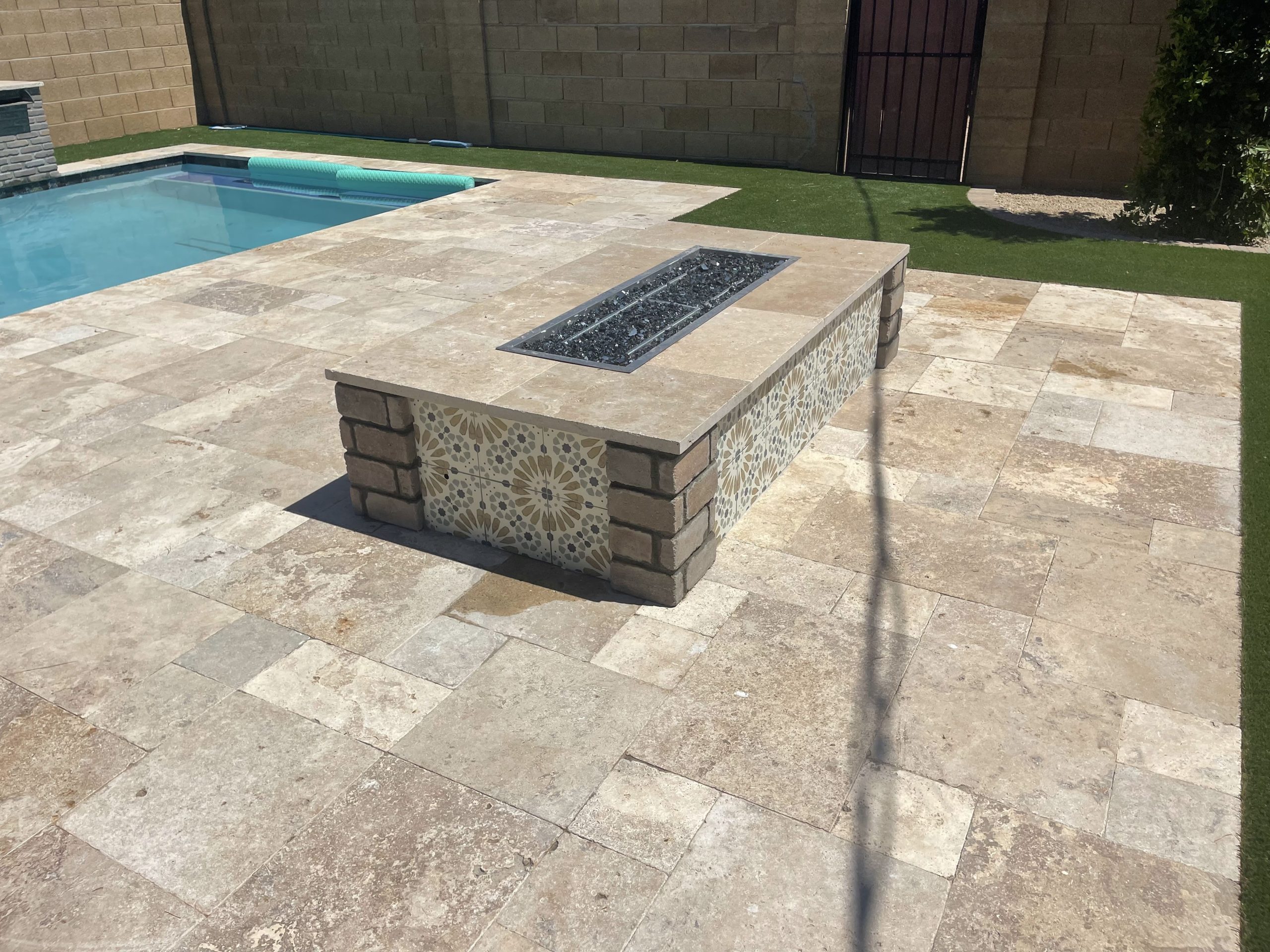
Travertine is one of the most popular pool deck materials in the Valley. It is a natural stone with a tumbled or brushed surface that grips well when wet, and in ivory, walnut, and other light tones it stays comfortable for bare feet. The tradeoff is that travertine is porous, so it needs sealing to resist stains and hard-water marks from splash-out, and natural pitting and color variation are part of the look. Porcelain pavers are dense and absorb very little water, so they hold up well to stains and pool chemicals and give a clean, uniform look that suits modern homes. Around a pool they need a textured, outdoor-rated finish, and darker porcelain colors get hot, so lighter tones are the better pick. Concrete pavers offer the widest choice of shapes and colors and are usually the most budget-friendly paver option, though they show surface wear and some fading over the years, and dark colors hold heat.
Some homeowners ask about keeping their concrete deck and recoating it with a spray-on cool-deck finish. A coating costs less up front and is cooler than bare concrete, so it can make sense on a slab that is structurally sound. It does not fix the slab underneath, though. Cracked or heaved concrete usually shows back through a new coating, and coatings wear and need resurfacing again down the road. When a deck is cracked, settling, or pulling away from the coping, replacing it with pavers is usually the better long-term fix, and we will tell you plainly which route fits your deck.
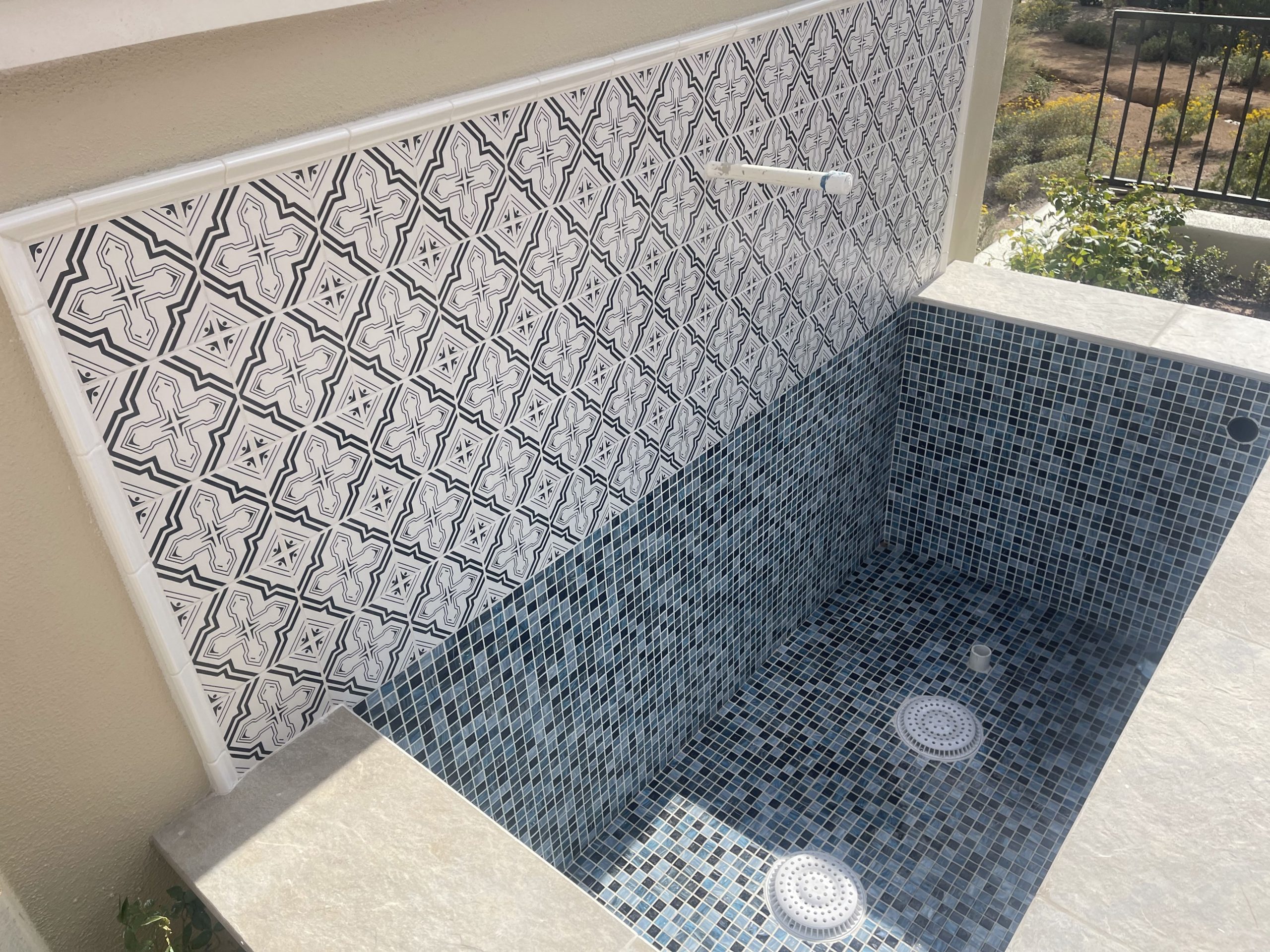
We build every deck on a properly compacted base with the drainage slope running away from the pool, so rain and splash water head toward the yard or deck drains instead of back into the water or against the house. The coping and deck are planned together. On most remodels we replace the coping along with the deck, often with a bullnose travertine coping, or we set the new pavers tight to coping that is staying so the pool edge and deck read as one finished surface. Pavers go down with clean, consistent joints, edge restraint around the outer perimeter, and joint sand swept in and compacted. The result is a slip-resistant surface that handles heat, UV, monsoon rain, and pool chemicals, and if a paver is ever damaged it lifts out and a new one drops in with no patching or visible repair. Because the coping work sits right at the waterline, a deck remodel is also a good time to look at your tile and pool surface.
Several things drive the cost of a pool deck. Square footage and material are the obvious ones, since travertine, porcelain, and concrete pavers each land in a different range. Removing an existing concrete or cool-deck surface adds demolition and haul-off, and replacing coping adds labor at the pool edge. Base conditions matter too, because soft spots, old roots, or areas where water collects have to be corrected before pavers go down. Access is a real factor in many Phoenix neighborhoods, where a narrow side yard means material is moved in by hand or with small equipment. Borders, curves, raised spa surrounds, and cut-heavy layouts like French pattern take more time than a straight running layout. We go over each of these on site so your estimate reflects your yard.
Paver pool decks in Arizona need some upkeep, but not much. Sealing travertine every few years helps it resist staining and makes hard-water spots from splash-out and misters easier to clean, and on saltwater pools keeping the stone sealed is especially important. Joint sand can wash out near downspouts or after heavy monsoon storms and should be topped up so the pavers stay locked in. New concrete pavers sometimes show a white haze called efflorescence, which comes from natural salts in the material and typically fades or cleans off. After a monsoon, blow off dust and debris before it ends up in the pool and the filter. Skip acid-based cleaners on travertine, since they etch natural stone.
We coordinate the deck with the rest of the backyard, whether that means extending the pavers into a patio, tying in a fire feature or outdoor kitchen, or adding a raised spa surround. Owner Shawn Walker brings more than 18 years of experience to every project, and our family-owned team will measure your deck, check the coping and drainage, and walk you through material samples in person. Contact AZ Pool Concepts for a free on-site consultation and a detailed estimate for your pool deck.
FAQ