Paver Patios
Custom paver patios in Phoenix built for dining, lounging, and shade, in travertine, porcelain, or concrete pavers, with room for fire and kitchen features.
Start Your Project
Step 1 of 2Request a Free Quote
Free design consultation & estimate — no obligation.
Pavers & Hardscaping
Paver Patios in Phoenix, AZ
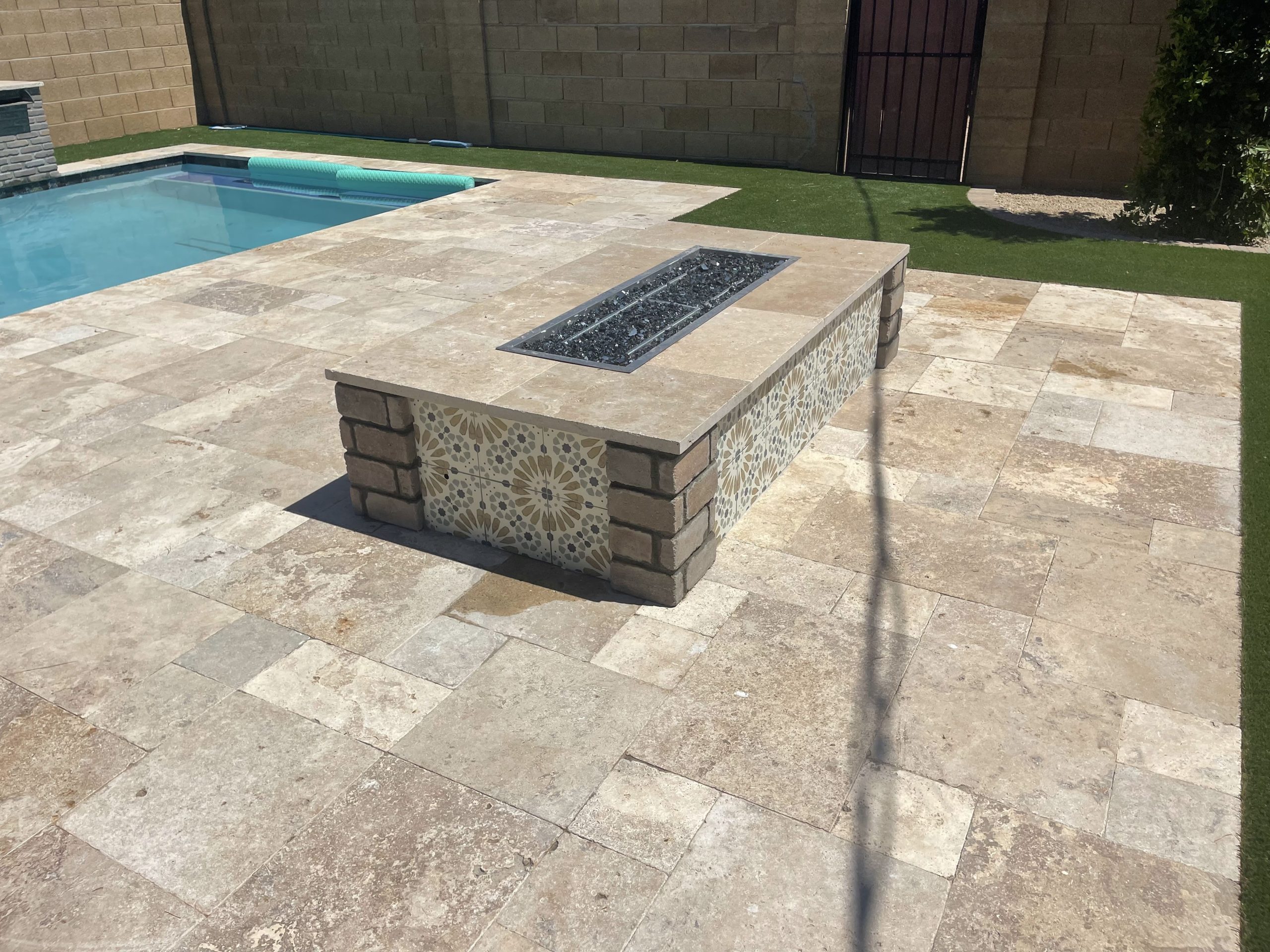
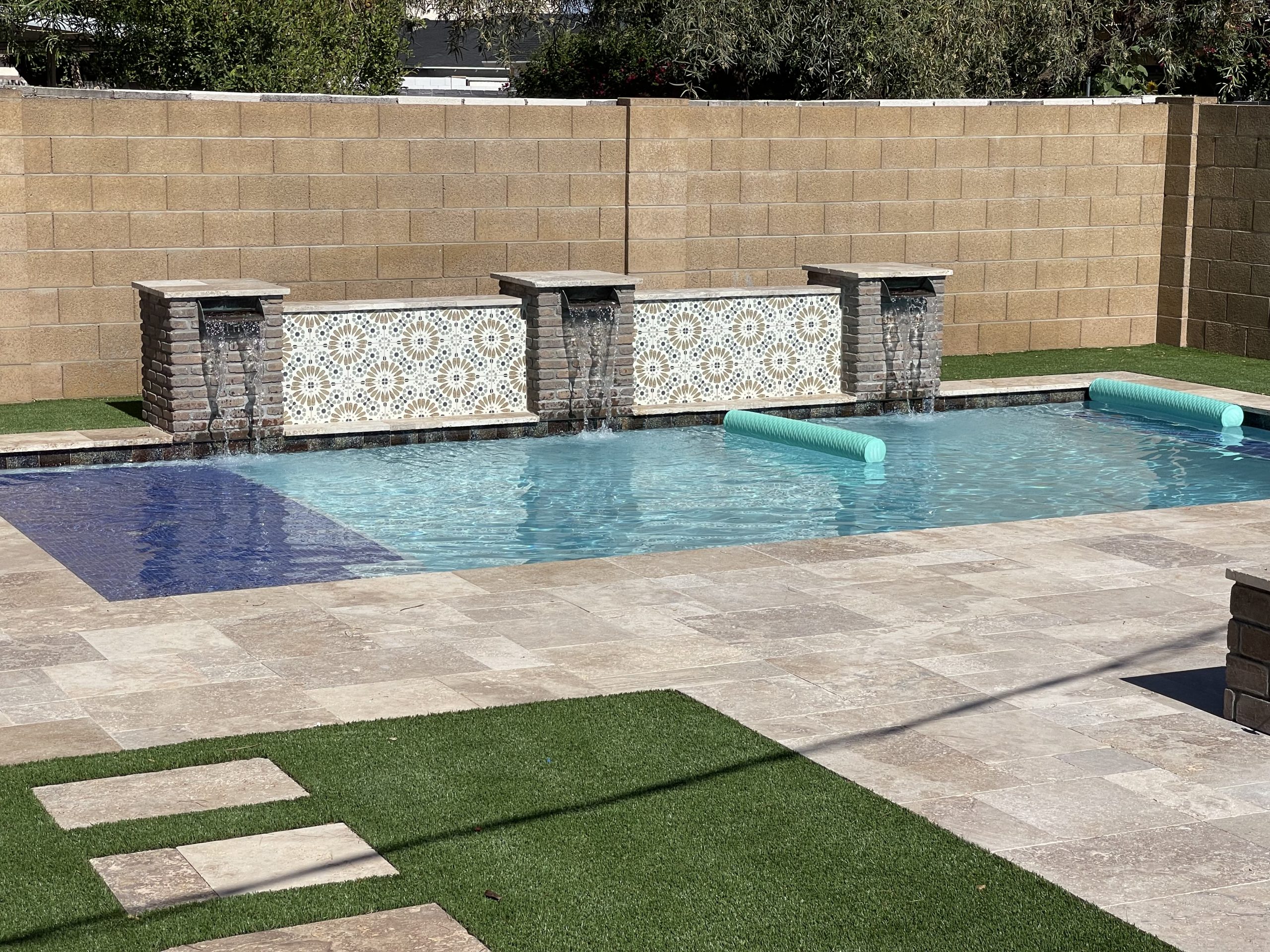
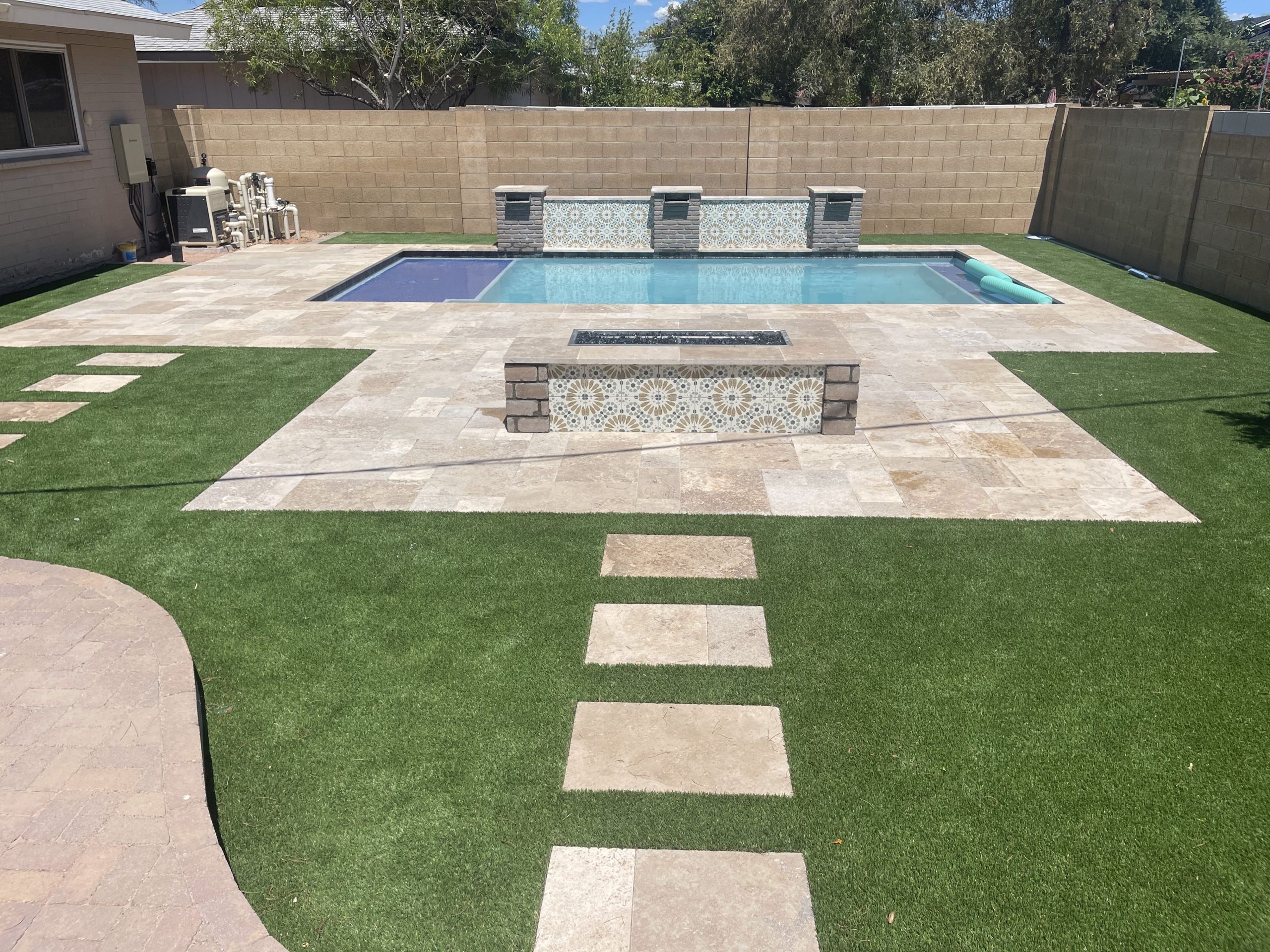
A paver patio turns an unused stretch of yard into the place everyone wants to be: a spot for dinner outside, a fire feature on a cool evening, or shade and seating next to the pool. AZ Pool Concepts designs and builds custom paver patios across the Phoenix area, sized and shaped to how you actually plan to use the space.
The best patios are planned around furniture and the way people move through them. A dining area needs room to pull chairs out without stepping off the pavers, a lounge area needs space for a sectional and a path around it, and a grill or outdoor kitchen needs clearance from seating and the house. Sun direction matters just as much. A west-facing patio takes the full afternoon sun in a Phoenix summer and almost always needs shade to be usable, while a north or east exposure may only need a partial cover. Sketching furniture zones before the shape is final keeps the patio from ending up too small once it's furnished.
A patio is often the foundation for other features, so the order of work matters. Ramada and pergola posts need footings in place before the pavers go down, with pavers cut cleanly around each post. Outdoor kitchens need gas, electrical, and sometimes water lines run under the patio in sleeves first, so nothing has to be pulled up later. Fire pits and fire tables need a gas line or a plan for wood burning, and seat walls need their own footing. Rain off a patio cover has to go somewhere, so we plan where downspouts land and how water leaves the patio. Since we also build outdoor living structures, we can design the patio and these features as one plan.
For material, travertine is a favorite on patios next to a pool, since it stays cool underfoot and can match a travertine pool deck. It needs sealing, and grease or wine spills near a grill will stain unsealed stone. Porcelain is a strong choice around an outdoor kitchen because it resists grease and food stains and wipes clean, though lighter colors are the better pick where the patio sits in full sun. Concrete pavers give you the most freedom with color, shape, and pattern and are practical for large patios, with the caveat that dark colors get hot and some fading over many years is normal. Natural flagstone suits a rustic or desert-style patio, but its uneven surface is less friendly to tables and chairs. Stamped concrete and cool-deck coatings cost less up front, but they are still a slab, and when the slab cracks the repair is hard to hide.
Every patio starts with excavation, a compacted aggregate base, and a slope that carries water away from the house and toward the yard or a drain. Getting this right matters most during monsoon season, when a lot of rain arrives fast. Where a patio meets the house, we keep the finished surface below the door threshold and the stucco weep screed so water can't sit against the wall. Then we set travertine, porcelain, or concrete pavers in the pattern you choose, add borders, raised edges with coping, or step-downs, and lock the field in with edge restraint and joint sand. Light-toned pavers keep the surface comfortable underfoot in the Arizona heat, and the jointed construction flexes with the soil instead of cracking the way poured concrete does.
Patio cost comes down to size, material, and what is built into it. Removing an existing slab or old patio adds demolition and haul-off. Base prep varies with the soil, and some yards need extra fill, compaction, or drainage work before pavers can go down. Complex patterns, curved edges, borders, and inlays increase cutting and labor. Seat walls, fire pits, kitchen islands, and shade structures are each priced on their own, along with any gas or electrical runs. Access matters as well, especially for backyards reached only through a side gate. During the consultation we'll show you where each choice affects the estimate so you can decide where to spend and where to save.
Arizona patios need modest care. Sweep or blow off dust and leaves, especially after monsoon storms, and rinse instead of pressure-washing up close, which can blast the joint sand out. Top up polymeric sand wherever the joints wash low. Hard-water spots from misters and sprinklers are common on patios; a sealed surface makes them much easier to remove, and aiming misters away from the pavers helps. Concrete pavers may show white efflorescence early on, which typically fades. Reseal travertine every few years, clean grease near the grill promptly, and keep acidic cleaners off natural stone.
Patios pair naturally with pool decks, walkways, and desert landscaping, and we design the whole backyard as one connected space. Contact AZ Pool Concepts for a free on-site consultation. We'll measure the area, talk through how you want to use it, and give you a detailed patio estimate.
FAQ